What To Do When Your Cats Are Fighting
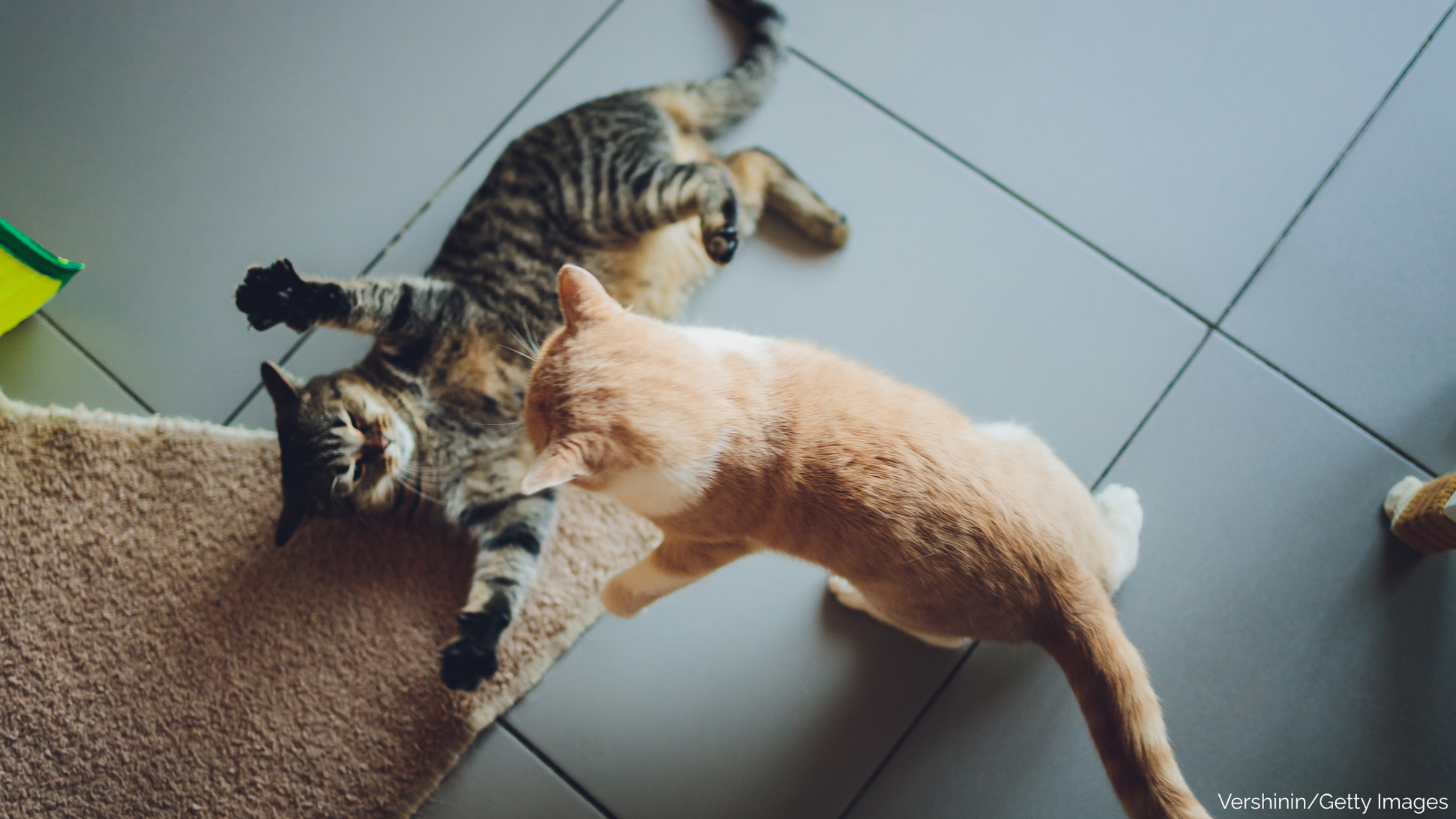
When tension or conflict starts between cats, it can be hard to know where to begin. Maybe there have been a few tense moments that you brushed off, or maybe things have escalated to full blown fights.
Whatever stage you’re at, here are some steps to help you figure out what’s going on and what to do next.
1. See a Vet
First things first: don’t ignore the possibility of pain or illness.
Changes in behaviour or dynamics between cats can sometimes be related to an underlying medical issue. A vet check is an important first step in making sure there isn’t a physical reason for the change.
2. Separate Cats Who Are a Danger to One Another
If your cats are fighting and there is a risk of injury, separate them.
Giving cats space prevents further negative interactions while you figure out what is contributing to the tension. It also gives everyone a chance to decompress.
3. Start Your Detective Work
When did you first notice the tension or conflict?
Think back. Was there anything that seemed off even before the first fight? If your cats aren’t separated, where and when are the fights happening? Which cats are involved? Is one cat consistently starting them?
Journaling and tracking what you see can be really helpful here. You’re looking for clues that can help you understand what is happening before, during, and after these interactions.
4. Determine the WHY
Now it’s time to look for the reason behind the conflict.
Look through your journaling and brainstorming. Do you notice a trend?
Are they fighting over a favourite spot or key resource? Is an outside factor causing redirected aggression? Is play getting too rough or is one cat trying to play when another cat doesn’t want to?
There can be more than one reason for conflict, so don’t worry if the answer isn’t immediately obvious.
5. Look for Patterns and Triggers
Once you start looking closely, you may notice patterns.
Is there a particular time of day when fighting is worse? Has a habit formed that regularly causes distress between the cats? Are some of their needs not being met?
These patterns can give you valuable information about what needs to change.
6. You Have the WHY and the Patterns. Now What?
Be proactive and start meeting those missing needs.
Begin an enrichment routine for all of your cats, especially the ones most involved in the conflict. Look at routines or habits that seem to contribute to fights and make changes where needed.
For example, you might:
• Separate cats before meal times
• Have separate play times
• Separate cats overnight or when you can’t intervene
• Provide more opportunities for enrichment and choice
• Train tools that help you effectively redirect and diffuse tense moments
• Teach behaviours that help create better habits
The goal isn’t just to stop the fighting. It’s to change the circumstances that are contributing to the conflict in the first place.
7. If They’re Still Fighting, Consider a Re-Introduction
If fights are happening every day and you have already separated the cats, it may be time to begin a full re-introduction.
A proper re-introduction gives cats the opportunity to rebuild positive associations and gradually become comfortable around one another again.
8. Feeling Overwhelmed? We Can Help.
Cat conflict can get complicated, especially when there are multiple cats, multiple triggers, or a long history of tension.
If you’re struggling to figure out the WHY or aren’t sure what to do next, you don’t have to figure it out alone.
Contact our Certified Cat Trainer for help creating a plan that makes sense for your cats and your home.