“If he didn’t like it, he would leave” fails our cats.
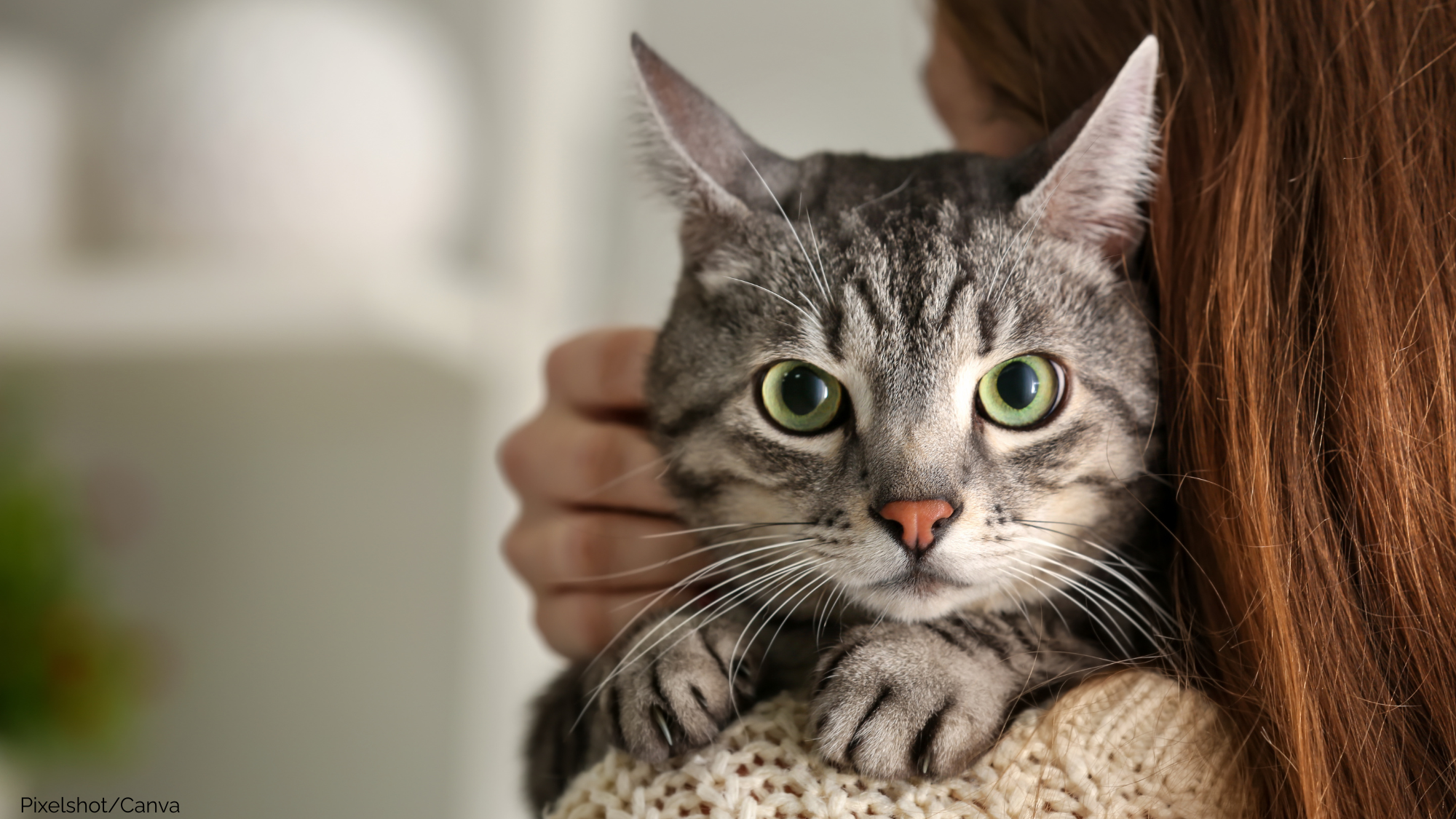
“If he didn’t like it, he would leave”.
I understand where this thought comes from.
Most of us have seen a cat make their feelings very clear by walking away, swatting, hissing, or setting a boundary in a way that leaves no room for confusion. Cats are known for their ability to protect themselves and communicate strong boundaries. It’s something so many of us admire about them.
We’ve also been scrolling and have come across videos where a cat seems to have every option to leave the situation, but they don’t. People laugh about it in the comments and we are led to believe that cat is tolerating and choosing to stay.
But here’s the problem:
Not every cat responds to discomfort by leaving.
And when we assume they do, we are doing an injustice to our cat’s wellbeing.
Cats deal with stress in many ways.
Cats don’t have just one response to stress or discomfort. While some will absolutely remove themselves or escalate to “fight mode”, others respond in ways that are much quieter.
The Freeze Response:
One of the most misunderstood responses in cats is the freeze response.
A cat who freezes is still. They don’t struggle or try to escape. To us, that can look like acceptance and calmness. But what’s actually happening is very different.
Cats freeze when they are so overwhelmed that they shut down. It’s one of their natural responses as prey animals in an attempt to disengage and disappear. They do this to make the threat go away, not to “accept their fate”. It is often their last resort.
This isn’t tolerance or consent. It’s terror.
Learned Helplessness:
Over time, if a cat is frequently in situations where their boundaries are ignored, where all other communication doesn’t change the outcome, they can stop trying altogether.
From the outside, it can look like a “well-behaved” or “easygoing” cat. A cat who “lets you do anything”.
But in reality, it’s a cat who has learned that their attempts to protect themselves don’t work. They haven’t learned to like it; they’ve run out of options.
Coercion:
This is another layer that we miss often.
As humans, we control access to almost everything our cats need - food, play, territory, social interaction.
When we use those resources to get compliance, like asking a cat to tolerate handling or interactions in exchange for a meal, we are not truly offering choice.
If the alternative is not eating or missing out on a basic need, then it’s not a fair decision. It’s pressure.
So, what should we be looking for instead?
If “he would leave if he didn’t like it” isn’t reliable, then what is?
Learning to read their body language is the best place to start. Look for:
- A tense and tucked body
- Ears that are rotated or flattened back
- Rapid, whip-like tail movement or a tucked-in tail
- Dilated pupils and widened eyes
- Rapid breathing
- Avoidance before the interaction even happens
- Small attempts to disengage
These are our cats communicating, its just not in the loud, obvious ways we expect.
Respecting boundaries before they have to be enforced
Cats are incredibly good communicators. The challenge is that we tend to listen only when the message gets loud. By the time they do get loud, they’ve already tried several quieter ways to say “no thank you”.
When we rely on the idea that they’ll “just leave,” we put the responsibility on cats to escalate, then we blame them for being “mean” and “unpredictable”. That’s just not fair.
Because we do know better.
It’s up to us to recognize and respect those boundaries early before a cat is forced to defend them.